
PIPELINE
Platform Expansion: Turning the Undruggable into the Druggable
One delivery platform, engineered for many diseases. Our most advanced program targets KRAS G12V in pancreatic cancer, reaching a driver with no FDA-approved targeted therapy.
Malaria and spinal muscular atrophy programs are advancing behind it, built on the same delivery mechanism.
KRAS G12V PROGRAM
A Program Challenged by
One of Oncology's Hardest Targets
KRAS is one of the most frequently mutated oncogenes, driving tumor initiation, progression and therapeutic resistance across pancreatic, colorectal and lung cancers.
Mutant KRAS proteins remain among oncology's most challenging intracellular targets due to their intracellular localization, structural complexity and central role in multiple signaling and metabolic pathways.
KRAS G12V is one of the most aggressive and treatment-resistant KRAS variants, representing a significant unmet clinical need.
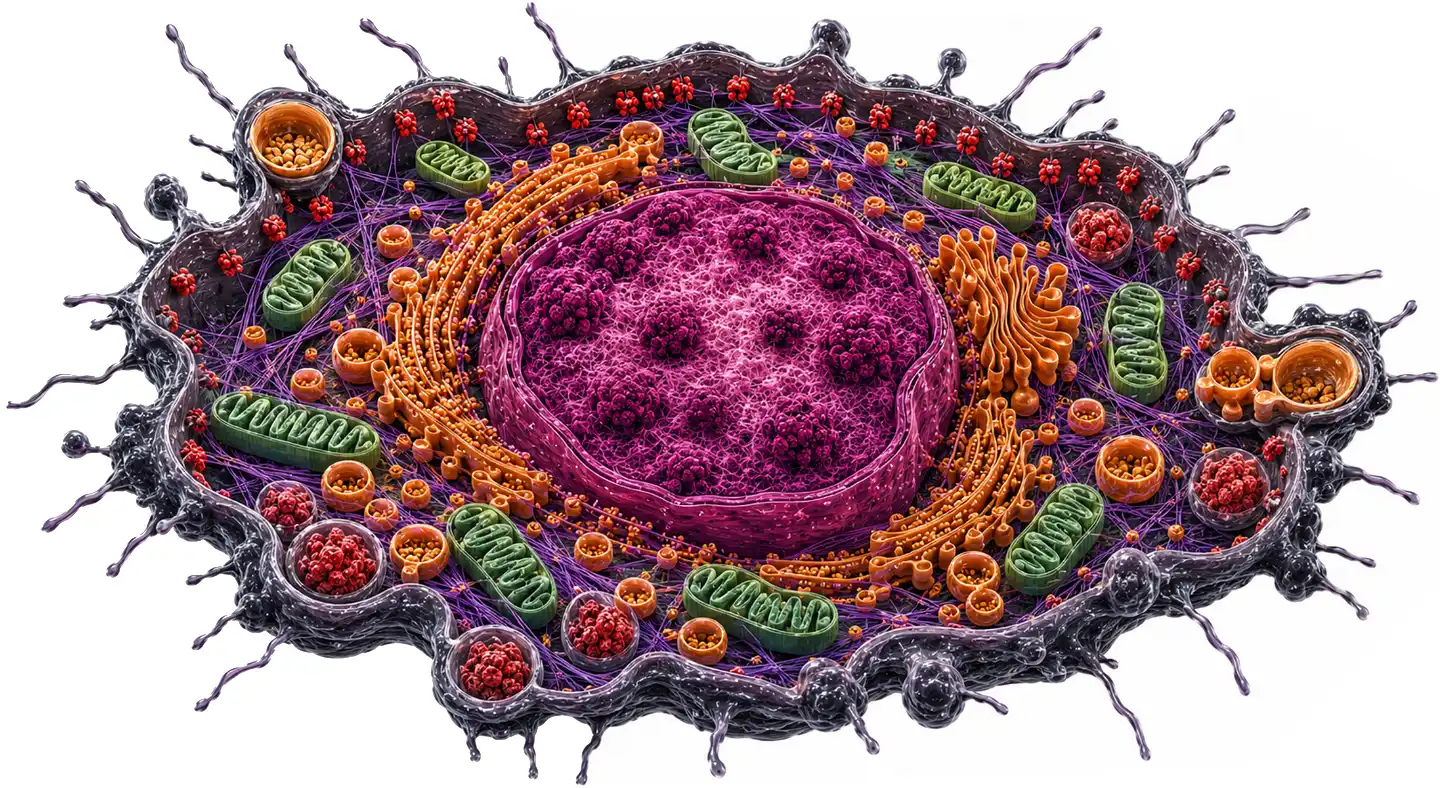
Its exceptional biological importance and therapeutic difficulty make KRAS G12V an ideal proof-of-concept target for demonstrating the capabilities of the COMED Hooks intracellular delivery platform.
Precision Through Mutation-Specific Recognition
Selective recognition of KRAS G12V with no measurable binding to wild-type KRAS provides the molecular basis for tumor-selective intracellular targeting with an expected, negligible off-target risk.


Efficacy Demonstrated in a Living Tumor Model
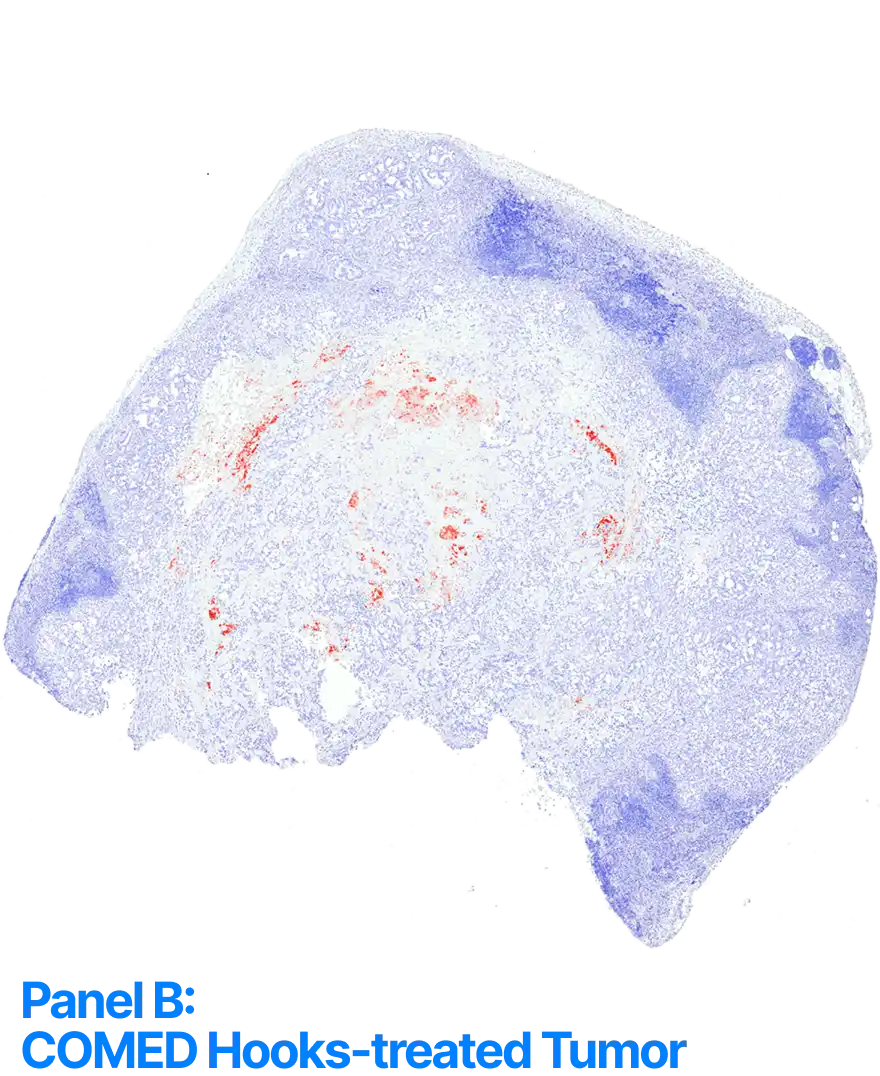
Preclinical animal studies demonstrated significant and durable antitumor activity in a KRAS G12V-driven pancreatic cancer model.
The majority of treated animals achieved substantial tumor growth inhibition, with therapeutic activity emerging early and remaining durable throughout the treatment period.

Favorable In Vivo Tolerability Shown
COMED Hooks demonstrated favorable in vivo tolerability at therapeutically active, low-dose administration, with no treatment-related mortality, no observable adverse clinical signs and stable body-weight profiles throughout the study.
This program is supported by a research grant from Xjenza Malta.
MALARIA PROGRAM
A Persistent Global Killer, Outpacing Current Tools
Malaria's persistence as a global killer is not for lack of attention—it is for lack of sufficient tools. Genetic resistance, antigenic variation, and the parasite's intracellular life cycle have pushed conventional vaccines and drugs to their limits.
Malaria causes an estimated 263 million cases and 600,000 deaths each year, with global costs exceeding €12 billion in treatment, lost productivity, and household prevention expenses.
Current treatment relies heavily on artemisinin-based combination therapies, a dependency that carries increasing risk as resistance spreads and complicates treatment access and continuity in high-burden regions.
A Dual-Interface Strategy to Block Infection
COMED Hooks—our rationally designed bispecific antibody model—target both parasite and host interfaces to block Plasmodium invasion into erythrocytes, an approach designed to operate outside the constraints of current vaccine and drug paradigms.
The computational framework underpinning this design has been published in Gene (Elsevier) and recognized by MalariaWorld, reaching a global network of malaria researchers across 140 countries.
Advancing Toward In Vitro and In Vivo Validation
The computational phase established a validated design basis for the antibody model. The next phase advances into in vitro and in vivo validation.
The work was conducted with support from the Xjenza Malta Research Excellence Programme (REP-2024-064), which formally reviewed and validated the completed computational phase.
Every program runs on the same COMED Hooks delivery mechanism.